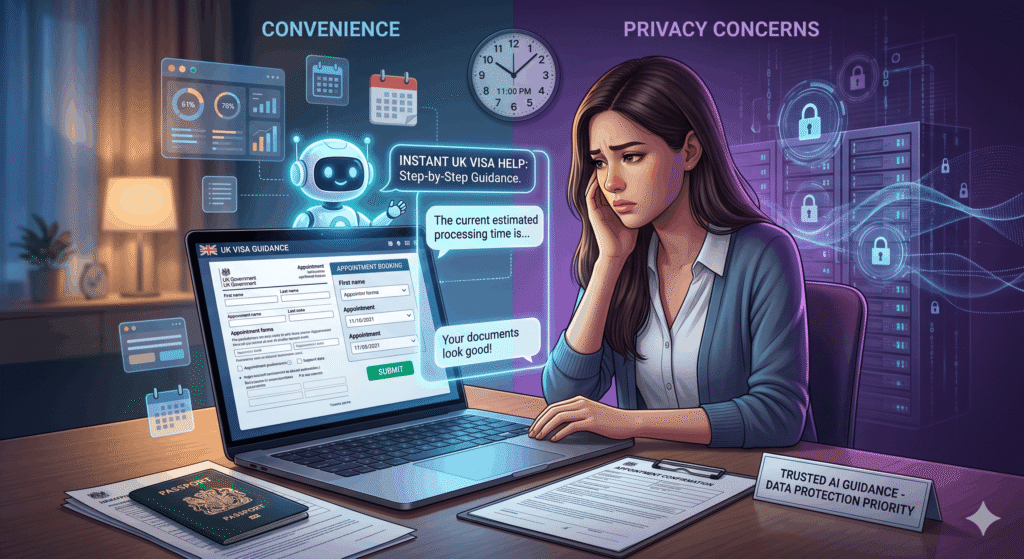

Yes, some jobs are already changing faster than many people expected, but the bigger story is not total replacement. An Ai chatbot is more likely to automate tasks first, then reshape roles around the humans who know how to work with it.
The Real Shift Happening Now
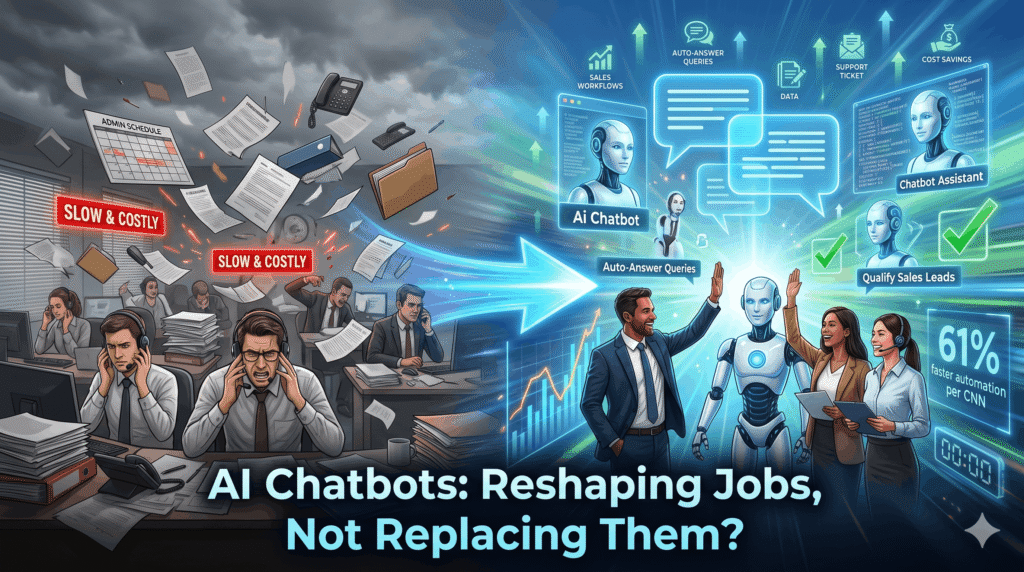
The fastest change is happening in repetitive work.
Customer support, admin tasks, basic writing, scheduling, and data handling are all being touched by AI chat and chatbot assistant tools because they are fast, cheap, and available around the clock.
That does not mean every role disappears overnight. It means many jobs are being split into two parts: what the Ai chatbot can do, and what the human still needs to handle.
Why Businesses Are Adopting AI Fast
Companies like AI because it saves time and reduces cost.
A CNN report noted that 61% of large U.S. corporations planned to use AI to automate tasks previously done by employees, showing how quickly this shift is moving in business settings.
For smaller teams, an Ai chatbot can act like a chatbot assistant that answers common questions, qualifies leads, and helps with basic support.
That is why AI chat is becoming common in sales, support, and marketing workflows.
Which Jobs Are Most Exposed
Customer Support Roles
Customer support is one of the clearest areas where an Ai chatbot can step in first. It can handle FAQs, order updates, booking help, and simple troubleshooting without human intervention.
Admin and Back-Office Work
AI chat systems are also taking on invoice sorting, document drafting, scheduling, and reporting tasks.
These jobs are not gone, but they are changing as companies let chatbot assistant tools do the routine work.
Entry-Level Knowledge Work
Research, content drafting, basic analysis, and first-pass coding are also exposed.
The more structured the task, the easier it is for an Ai chatbot to assist or replace the first layer of work.
What AI Still Cannot Replace
AI chat is fast, but it is not human judgment. It still struggles with emotional nuance, accountability, complex negotiations, and messy real-world decisions that require experience and context.
That is why many experts describe current AI as a co-pilot, not a pilot.
The chatbot assistant helps a person work faster, but the human still needs to steer.
The Jobs Most Likely to Grow
AI-Driven Support
Businesses need people to supervise AI chat, edit responses, and manage escalations.

A chatbot assistant can reduce workload, but it also creates a need for better oversight and prompt design.
Automation Setup and Optimization
As more companies adopt an Ai chatbot, they need specialists who can connect it to CRM systems, marketing tools, and support workflows.
That includes people who understand business goals, not just the technology.
Human-Led Sales
AI chat may capture leads, but humans still close many deals.
Buyers often want reassurance, negotiation, and trust before they commit, especially in higher-value services.
People Also Ask
Are AI chatbots replacing jobs?
Yes, but mostly by replacing tasks first, not entire careers. An Ai chatbot usually automates routine work before it fully changes a job role.
Will AI chat replace customer service jobs?
It will likely reduce the need for some basic support roles, but not eliminate human support entirely.
A chatbot assistant is best at repetitive questions, while humans handle complex cases.
What jobs are safest from AI chat?
Jobs that rely on empathy, leadership, negotiation, creativity, and real-world judgment are harder to automate.
AI chat can support these jobs, but it does not fully replace them.
How does AI chat help businesses?
AI chat helps businesses respond faster, reduce manual work, and improve lead handling.
It is especially useful when a chatbot assistant is connected to sales and support systems.
Can AI chat create new jobs?
Yes. AI creates demand for prompt designers, automation builders, AI trainers, workflow consultants, and human supervisors.
New work often appears when old work gets automated.
What This Means For Workers
The best response is not fear. It is adaptation.
Workers who learn how to use an Ai chatbot will usually have an advantage over workers who ignore it, because the real competition is shifting toward people who can work with AI chat tools.
That is especially true in marketing, support, and operations, where chatbot assistant systems are already being built into everyday processes.
The people who understand both business and AI chat will be the ones in the strongest position.
Final Thought
AI chat is not taking every job tomorrow, but it is changing work faster than many teams planned for.
The safest strategy is to learn the tool, use it well, and stay ahead of the shift instead of waiting for it to hit.
If you want to use an Ai chatbot to support your business development and sales targets, schedule a call with the team and we can help you build the right solution.